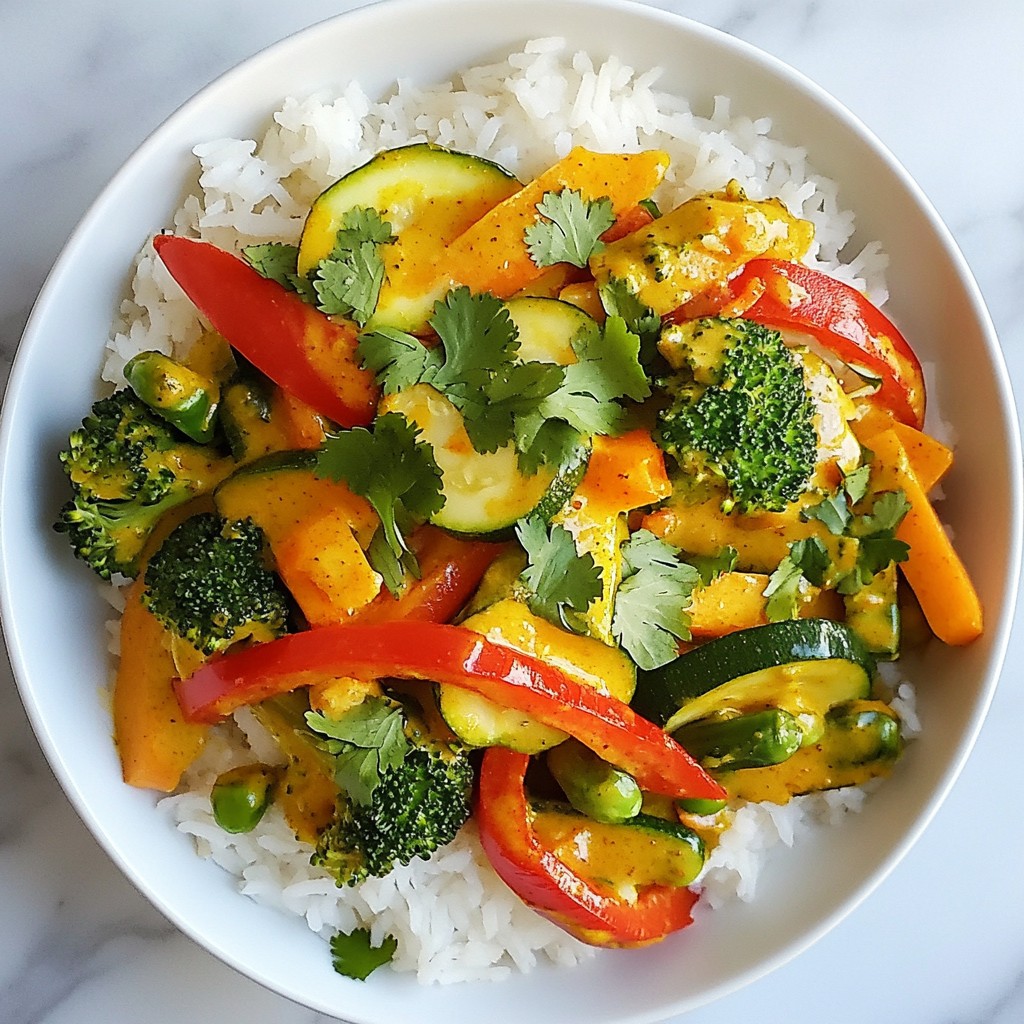
Looking for a quick and tasty meal? You’ve come to the right place! My Coconut Curry Veggie Stir-Fry is packed with flavor and ready in no time. With vibrant veggies and creamy coconut curry, this dish meets your dinner needs. Plus, it’s easy to tweak for your tastes or any allergies. Join me as we dive into a step-by-step guide to make this delicious meal tonight!
Why I Love This Recipe
- Delicious Flavor: The combination of coconut milk and red curry paste creates a rich and flavorful sauce that perfectly complements the fresh vegetables.
- Quick and Easy: This stir-fry can be prepared in just 25 minutes, making it a perfect weeknight dinner option.
- Healthy Ingredients: Packed with colorful vegetables, this dish is not only tasty but also nutritious and satisfying.
- Customizable: You can easily swap in your favorite vegetables or protein, allowing you to make it your own every time.
Ingredients
Main ingredients for Coconut Curry Veggie Stir-Fry
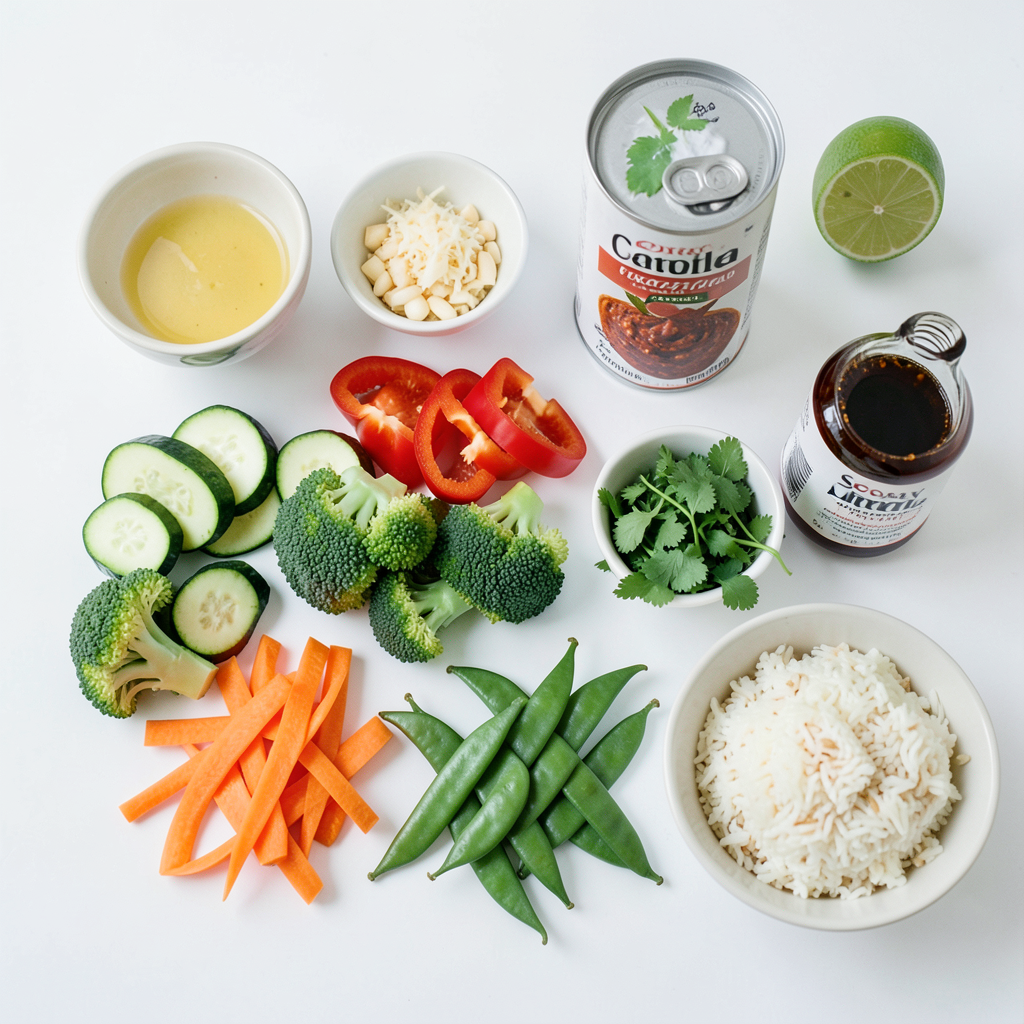
To create a tasty Coconut Curry Veggie Stir-Fry, you will need these key ingredients:
- 1 tablespoon coconut oil
- 2 cloves garlic, minced
- 1-inch piece ginger, grated
- 1 red bell pepper, sliced
- 1 zucchini, sliced
- 1 cup broccoli florets
- 1 carrot, julienned
- 1 cup sugar snap peas
- 1 can (400ml) coconut milk
- 2 tablespoons red curry paste
- 2 tablespoons soy sauce
- 1 tablespoon lime juice
- 1 teaspoon brown sugar
- Fresh cilantro, for garnish
- Cooked jasmine rice or quinoa, for serving
These ingredients come together to create a colorful and vibrant dish. The veggies add crunch and color, while coconut milk brings a creamy texture.
Overview of spices and sauces used
The magic in this dish lies in its spices and sauces. The red curry paste gives it a warm and spicy kick. It blends well with coconut milk, which adds richness. Soy sauce offers a touch of saltiness, balancing the flavors. Lime juice brightens the dish, making it fresh and lively. Brown sugar sweetens it just enough to enhance all those savory notes.
Recommended substitutions for allergies or preferences
If you have allergies or dietary preferences, you can easily swap ingredients.
- Use olive oil instead of coconut oil for a different flavor.
- Substitute ginger with ground ginger or omit it if needed.
- For gluten-free options, choose tamari in place of soy sauce.
- Swap veggies based on what you have. Bell peppers, carrots, and zucchini are great, but snap peas can be replaced with green beans.
- If you prefer a dairy-free option, ensure your red curry paste is free from dairy ingredients.
These substitutions keep the dish enjoyable while catering to different needs.
Step-by-Step Instructions
Preparation of vegetables
Start by washing all your vegetables. Slice the red bell pepper and zucchini into thin strips. Cut the broccoli into small florets. Julienne the carrot into thin sticks. Finally, rinse the sugar snap peas. This step makes cooking quick and even.
Cooking the stir-fry
Heat 1 tablespoon of coconut oil in a large skillet or wok over medium heat. Add 2 cloves of minced garlic and 1-inch of grated ginger to the hot oil. Sauté them for about 30 seconds. This releases a nice aroma. Then, add your prepared vegetables: the red bell pepper, zucchini, broccoli, carrot, and sugar snap peas. Stir-fry these veggies for 5 to 7 minutes. They should soften but remain crunchy.
Making the coconut curry sauce
In a bowl, mix 1 can of coconut milk, 2 tablespoons of red curry paste, 2 tablespoons of soy sauce, 1 tablespoon of lime juice, and 1 teaspoon of brown sugar. Whisk well until everything blends smoothly. Pour this coconut curry sauce over the stir-fried vegetables. Stir well to coat all the veggies. Let it simmer for about 5 minutes. This allows the flavors to meld together beautifully.
Tips & Tricks
How to achieve the best flavor
To get the most out of your Coconut Curry Veggie Stir-Fry, start with fresh veggies. Fresh produce packs more taste and nutrients. Use good-quality coconut milk; it makes the sauce rich and creamy. Add red curry paste slowly, tasting as you go. This way, you control the heat and flavor. A squeeze of lime juice brightens the dish. Don't skip the brown sugar; it balances the flavors nicely.
Cooking techniques for perfect vegetables
Cook your vegetables in batches. This helps them cook evenly and stay crisp. Start with harder veggies like carrots and broccoli. Add softer ones like zucchini and bell pepper later. Stir-fry over medium-high heat for a short time. This keeps the veggies bright and crunchy. Keep them moving in the pan to avoid burning. If you notice them sticking, add a splash of coconut milk.
Serving suggestions for added variety
Serve your stir-fry over cooked jasmine rice or quinoa. Both add a nice base. For extra crunch, top with chopped nuts or seeds. Fresh herbs like basil or mint work well, too. You can also add a side of steamed greens for more color. If you want more protein, try adding tofu or chickpeas. This makes it filling and satisfying.
Pro Tips
- Prep Veggies Ahead: Chop all your vegetables beforehand to save time during cooking. This ensures a smooth stir-fry process and helps maintain the freshness of the ingredients.
- Adjust Spice Level: If you prefer a milder dish, reduce the amount of red curry paste. You can always add a little more later if you want extra heat!
- Add Protein: For a heartier meal, consider adding tofu, chicken, or shrimp to the stir-fry. Ensure that proteins are cooked thoroughly before adding the vegetables.
- Garnish for Flavor: Fresh cilantro not only adds color but also enhances the flavor profile. Consider adding a squeeze of lime just before serving for an extra zing!
Variations
Protein additions for a heartier meal
You can add protein to make this dish more filling. Tofu works great. Just press, cube, and sauté the tofu before adding the veggies. Chicken or shrimp are also good options. Cook these in the pan first, then add your veggies. Each protein brings its own flavor and texture to the dish.
Vegetable swaps for different seasonal ingredients
Feel free to switch out the veggies based on what's in season. Snow peas can replace sugar snap peas for a crunch. Cauliflower florets can take the place of broccoli. You can also use bell peppers of any color. Seasonal veggies keep the dish fresh and exciting.
Spice level adjustments for personal preferences
Adjust the spice level to fit your taste. If you like it mild, use less red curry paste. For extra heat, add chili flakes or fresh chopped chilies. You can also serve it with a side of hot sauce for those who want more kick. Tailoring the spice level makes it your own.
Storage Info
Best practices for storing leftovers
After you make the Coconut Curry Veggie Stir-Fry, let it cool. Use airtight containers to store any leftovers. This method keeps the veggies fresh and tasty. You can keep them in the fridge for up to 3 days. Make sure to label the containers with the date. This way, you know when to eat them.
Reheating instructions to maintain quality
When you're ready to eat the leftovers, reheat them gently. You can use a skillet over medium heat. Add a splash of water or coconut milk to keep the dish moist. Stir it often, so it heats evenly. You can also use a microwave. Heat it in short bursts, stirring in between. This keeps the veggies crunchy and the sauce creamy.
Freezing options for future meals
If you want to save some for later, freezing is a good option. Place the cooled stir-fry in freezer-safe bags or containers. Remove as much air as possible to prevent freezer burn. You can freeze it for up to 2 months. When you're ready to eat, thaw it in the fridge overnight. Then, reheat it as mentioned before. This method helps you enjoy a quick meal anytime.
FAQs
How can I make this Coconut Curry Veggie Stir-Fry vegan?
To make this dish vegan, check the red curry paste first. Some brands use fish sauce. Look for a vegan version or make your own with just spices. Use soy sauce instead of any animal-based sauces. The coconut milk is already vegan, so you’re good there. This way, you can enjoy all the great flavors without animal products.
Can I use canned vegetables in this recipe?
Yes, you can use canned vegetables. Just remember that they might be softer than fresh ones. Drain and rinse them to reduce extra salt. Add them during the last few minutes of cooking. This will help keep them from becoming mushy. Fresh veggies bring great crunch, but canned can work in a pinch.
What other dishes pair well with Coconut Curry Veggie Stir-Fry?
This stir-fry goes well with jasmine rice or quinoa. Both absorb the curry sauce nicely. You can also serve it with naan or whole grain pita for extra flavor. For a full meal, add a fresh salad or some spring rolls on the side. They will balance the richness of the curry.
This article covered the key parts of making a Coconut Curry Veggie Stir-Fry. We discussed essential ingredients, spices, and how to customize for allergies. The step-by-step guide helps you prepare, cook, and create a tasty sauce. You learned how to add variety, from proteins to changing veggies. We also shared tips for storing leftovers and reheating them. Remember, cooking can be fun and flexible. Enjoy this dish in your own way!