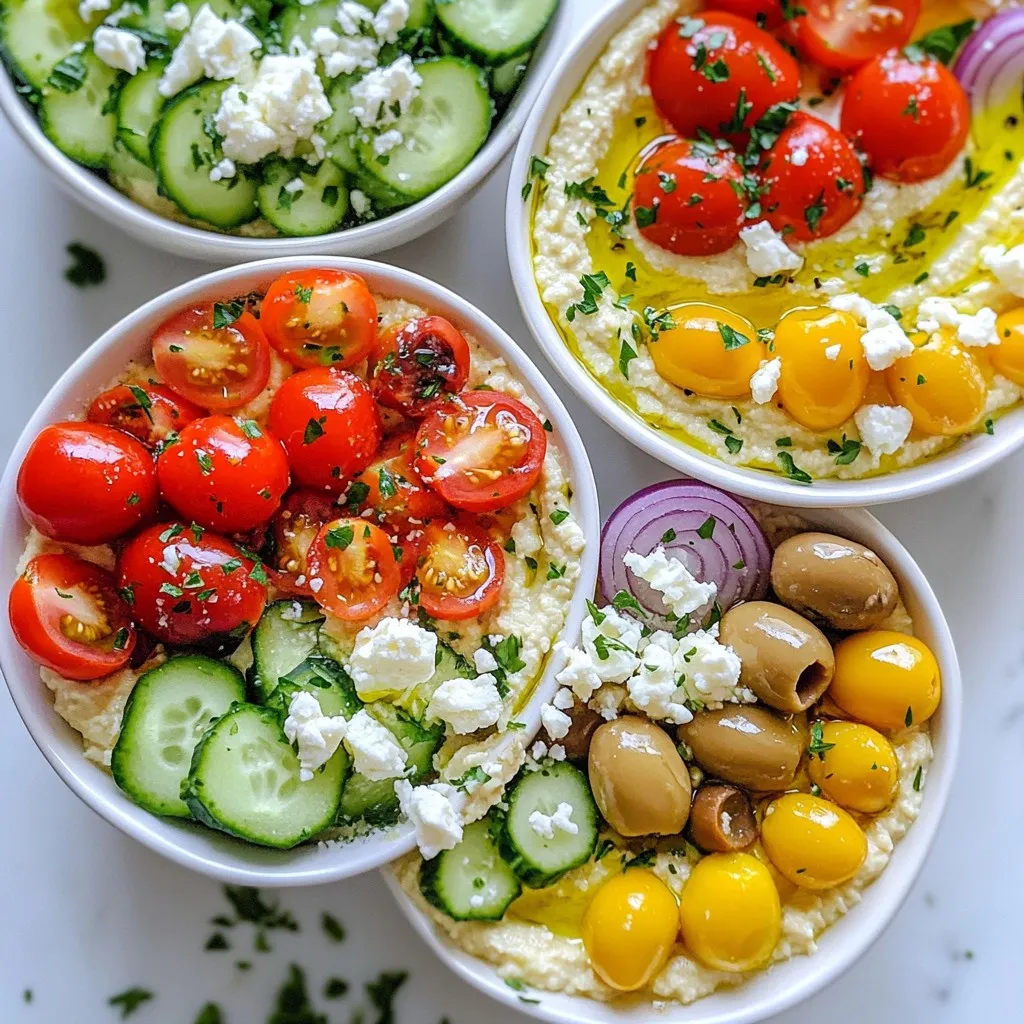
Looking for a quick and tasty meal? Mediterranean Hummus Bowls make a perfect choice! You’ll love their mix of fresh veggies, creamy hummus, and grains. This easy recipe is packed with flavor and healthy ingredients. Whether you’re vegan, gluten-free, or just love good food, these bowls fit the bill. Let’s dive into how you can whip up this delicious dish in no time!
Why I Love This Recipe
- Fresh and Flavorful: This Mediterranean Hummus Bowl is packed with vibrant vegetables and fresh herbs, making it a delightful and refreshing meal.
- Customizable: You can easily swap out ingredients based on your preferences or what you have on hand, ensuring every bowl is uniquely yours.
- Quick and Easy: With a prep time of just 15 minutes, this dish is perfect for busy weeknights or last-minute gatherings.
- Healthy and Nourishing: Combining protein-rich hummus with wholesome quinoa and fresh veggies makes this bowl not only delicious but also nutritious.
Ingredients
Key Ingredients for Mediterranean Hummus Bowls
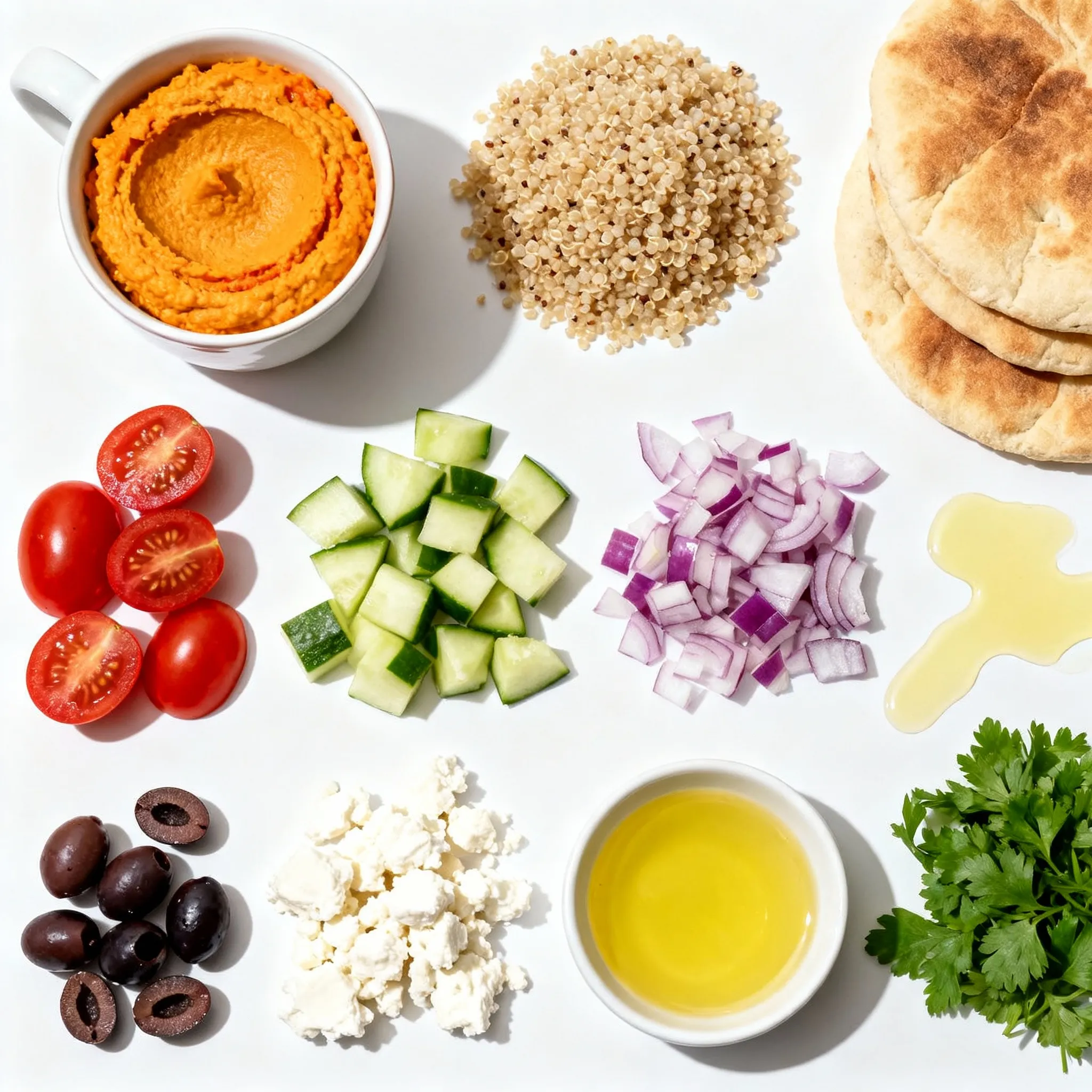
– 1 cup homemade or store-bought hummus
– 1 cup cooked quinoa or couscous
– 1 cup cherry tomatoes, halved
– 1 cucumber, diced
– 1/2 red onion, finely chopped
– 1 cup kalamata olives, pitted and halved
– 1/2 cup feta cheese, crumbled
– 2 tablespoons fresh parsley, chopped
– 1 tablespoon lemon juice
– 2 tablespoons extra virgin olive oil
– Salt and pepper, to taste
– Pita bread, for serving
These ingredients create a colorful and tasty bowl. Hummus serves as the base. It adds creaminess and flavor. Quinoa or couscous adds a nice texture and boosts nutrition. Fresh veggies like tomatoes and cucumber bring crunch and freshness. Red onion adds a bit of zing. Olives and feta provide salty bites that enhance the taste.
Optional Toppings and Add-ins
– Avocado slices
– Roasted red peppers
– Chickpeas, roasted
– Fresh mint or dill
– Sliced radishes
Feel free to get creative with toppings. Avocado adds creaminess. Roasted red peppers bring a sweet flavor. Chickpeas boost protein and fiber. Fresh herbs like mint or dill give a refreshing twist. Sliced radishes add a crunchy bite.
Nutritional Information of Ingredients
Hummus is rich in protein and fiber. It helps keep you full. Quinoa offers essential amino acids. It is a complete protein source. Cherry tomatoes are low in calories and high in vitamins. Cucumbers are hydrating and low in calories. Olives provide healthy fats. Feta cheese adds calcium but watch the portion for sodium. Overall, this bowl is a well-rounded meal packed with nutrients.
Step-by-Step Instructions
Preparation of Vegetables and Salad
Start by washing the cherry tomatoes and cucumber. Cut the tomatoes in half and dice the cucumber. Then, chop the red onion finely. In a medium bowl, mix the halved tomatoes, diced cucumber, and chopped onion. Drizzle two tablespoons of olive oil and one tablespoon of lemon juice over the veggies. Add salt and pepper to taste. Toss the mixture gently, and set it aside. This salad adds a fresh taste to your hummus bowl.
Cooking Quinoa or Couscous
If you choose quinoa, measure one cup and rinse it under cold water. Then, boil two cups of water in a pot. Add the quinoa. Cook it for about 15 minutes until it is fluffy. If you use couscous, follow the package instructions. Once cooked, fluff it with a fork and let it cool slightly. This step gives the base of the bowl a nice texture.
Assembling the Hummus Bowls
Grab your serving bowls and spread one cup of hummus at the bottom. Use a spoon to create a smooth layer. Next, add one cup of cooked quinoa or couscous on top of the hummus. Make sure to spread it evenly. Now, take the colorful veggie salad and spoon it over the quinoa. Sprinkle a half cup of kalamata olives and crumbled feta cheese on top. To finish, add fresh parsley for color and taste. Serve your bowls with warm pita bread for dipping. Enjoy every flavorful bite!
Tips & Tricks
How to Make Creamy Hummus
To make creamy hummus, start with quality chickpeas. If using canned chickpeas, rinse them well. You can peel the skins for extra smoothness. Blend chickpeas with tahini, lemon juice, garlic, and salt. Add ice water slowly while blending until it’s smooth. A drizzle of olive oil at the end enhances the flavor. Always taste and adjust salt or lemon juice to your liking.
Best Practices for Layering Ingredients
Layering is key to a beautiful hummus bowl. Start with a thick layer of hummus at the bottom. This not only adds flavor but also helps hold the other ingredients. Next, spread the cooked quinoa or couscous evenly. Follow this with your fresh salad mix. Add kalamata olives and feta last to avoid sogginess. Use parsley as a bright finishing touch on top.
Suggestions for Ingredient Substitutions
You can easily swap ingredients to match your taste. If you don’t have quinoa, couscous works great too. Use any fresh vegetables you enjoy, like bell peppers or radishes. For a vegan option, skip the feta or use a plant-based cheese. If olives aren’t your thing, try capers or sun-dried tomatoes. Each choice adds a unique twist to your bowl.
Pro Tips
- Use Fresh Ingredients: The quality of your vegetables and herbs can greatly enhance the flavors of your hummus bowl. Opt for fresh, ripe tomatoes and crisp cucumbers for the best taste.
- Customize Your Bowl: Feel free to switch up the ingredients based on your preferences. Add roasted red peppers, artichokes, or even grilled chicken for a protein boost.
- Make It Ahead: Prepare the quinoa or couscous and the salad in advance. Store them separately in the refrigerator, and assemble the bowls just before serving for a quick meal.
- Serve with Warm Pita: Warm pita bread enhances the overall experience. Toast or warm the pita before serving for a delightful texture contrast with the creamy hummus.
Variations
Vegetarian and Vegan Options
You can easily make this dish meat-free. The main star is hummus, which is already vegan. Use quinoa or couscous as your base. Fresh veggies like cucumber, tomatoes, and red onion add crunch. To make it even better, add avocado slices for creaminess. You can swap feta cheese for vegan cheese or just skip it. This way, everyone can enjoy the bowl.
High-Protein Additions
Want to pack in more protein? Add chickpeas or lentils to your bowl. They mix well with hummus and boost the protein level. You can also include grilled chicken or shrimp if you like meat. These options make the meal more filling without losing its fun vibe. Using Greek yogurt as a topping can add extra protein too.
Gluten-Free Alternatives
If you need a gluten-free meal, don’t worry! Use quinoa, as it is naturally gluten-free. You can also try rice instead of couscous. Make sure your hummus is gluten-free by checking the label. Adding more veggies or beans can help fill your bowl while keeping it gluten-free. You can still enjoy all the flavors without the gluten!
Storage Info
How to Store Leftovers
To keep your Mediterranean Hummus Bowls fresh, store leftovers in airtight containers. Place the hummus, quinoa or couscous, and salad in separate containers. This way, each part stays fresh longer. Use the leftovers within three days for the best taste.
Reheating Tips for Quinoa or Couscous
When you want to eat your leftovers, you can easily reheat the quinoa or couscous. Add a splash of water to keep it moist. Heat it in the microwave for one minute. Stir and check if it’s warm enough. If needed, heat for 30 more seconds.
Best Practices for Storing Fresh Vegetables
For your fresh veggies, like tomatoes and cucumbers, store them in the fridge. Keep them in a crisper drawer for the best flavor. Wrap cut vegetables in a damp paper towel to keep them crisp. Avoid washing them until you are ready to use them.
FAQs
What can I serve with Mediterranean Hummus Bowls?
You can serve many tasty sides with Mediterranean Hummus Bowls. Here are some ideas:
– Warm pita bread for scooping.
– Fresh veggies like carrots or bell peppers.
– A light salad with greens and vinaigrette.
– Grilled chicken or shrimp for protein.
– A side of tzatziki sauce for extra flavor.
These options complement the flavors and add variety to your meal.
How long do these bowls last in the fridge?
Mediterranean Hummus Bowls last about three to five days in the fridge. Store them in airtight containers. Keep the toppings separate from the hummus and grains if you want them fresh. This way, the veggies stay crisp, and the hummus stays creamy.
Can I prepare the ingredients in advance?
Yes, you can prepare the ingredients in advance. Here’s how:
– Chop the veggies and store them in the fridge.
– Cook quinoa or couscous a day ahead and let it cool.
– Make the hummus ahead of time, too.
This prep saves time and makes it easy to assemble bowls quickly.
Mediterranean hummus bowls are tasty, healthy, and easy to make. We covered essential ingredients, preparation steps, and helpful tips. You can customize your bowls with different toppings and add-ins to fit your taste. Remember to store leftovers properly and reheat them safely.
Enjoy exploring various variations, including vegetarian and gluten-free options. You’ll find that these bowls are perfect for any meal. Make these bowls a regular part of your menu for satisfying, nutritious meal