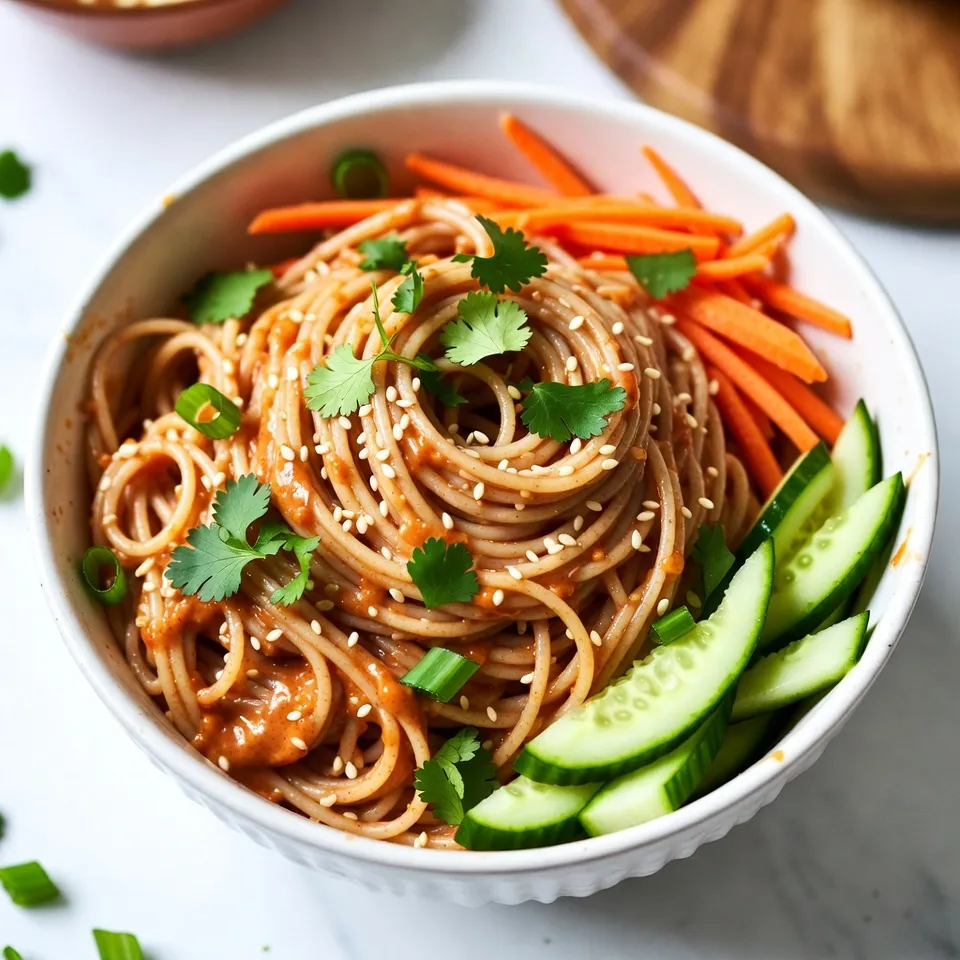
Looking for a cool and delicious dish? Try my Savory Sesame Peanut Cold Noodles! This simple recipe blends creamy peanut sauce with chewy noodles. It’s a quick meal that’s perfect for lunch or dinner. Plus, you can customize it with your favorite toppings. In this article, I’ll guide you through easy steps, tasty tips, and clever variations to make this dish your own. Let’s dive into the flavors!
Why I Love This Recipe
- Quick and Easy: This recipe comes together in just 30 minutes, making it perfect for busy weeknights.
- Flavorful Sauce: The creamy peanut sauce is a delightful blend of savory and sweet, elevating the dish to new heights.
- Fresh and Crunchy: With the addition of fresh vegetables like carrots and cucumbers, each bite is packed with texture and nutrition.
- Versatile: This dish can be served cold or at room temperature, making it ideal for picnics or meal prep.
Ingredients
Main Ingredients for Sesame Peanut Cold Noodles
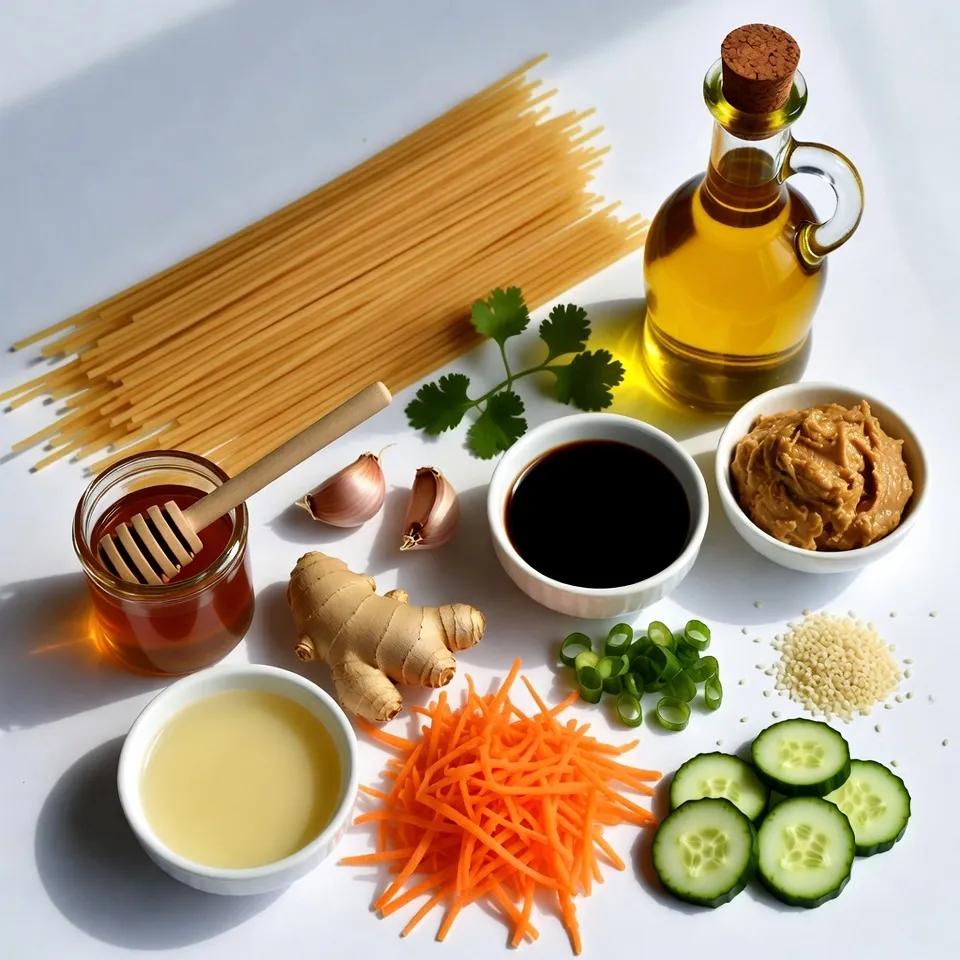
To make your sesame peanut cold noodles, gather these ingredients:
– 8 oz whole wheat spaghetti or any thin noodles
– 2 tablespoons sesame oil
– 1/4 cup natural peanut butter
– 2 tablespoons soy sauce (or tamari for gluten-free)
– 2 tablespoons rice vinegar
– 1 tablespoon honey or maple syrup
– 1 garlic clove, minced
– 1 teaspoon fresh ginger, grated
– 1/2 cup shredded carrots
– 1/2 cucumber, julienned
– 3 green onions, sliced
– 1 tablespoon sesame seeds (for garnish)
– Fresh cilantro leaves (for garnish, optional)
These simple ingredients come together to create a tasty dish. Whole wheat noodles add fiber. Peanut butter gives a rich, nutty flavor. Sesame oil adds depth.
Optional Garnishes and Add-ins
You can boost flavor with some extra touches. Here are a few ideas:
– Chopped peanuts for crunch
– Chili flakes for a spicy kick
– Lime wedges for a zesty twist
– Edamame for added protein
Feel free to mix and match these garnishes. They make your dish more fun and colorful!
Ingredient Substitutions for Dietary Preferences
If you have dietary needs, here are some easy swaps:
– Use gluten-free noodles if you avoid gluten.
– Swap honey for agave syrup for a vegan option.
– Instead of peanut butter, try almond butter for a different taste.
– Use coconut aminos instead of soy sauce for a soy-free option.
These substitutions keep the dish flavorful while catering to your needs. Enjoy your cooking adventure!
Step-by-Step Instructions
Cooking the Noodles
To start, cook the noodles according to the package instructions. I prefer whole wheat spaghetti for added flavor and nutrition. Aim for al dente, which means they should be firm to the bite. Once cooked, drain the noodles and rinse them under cold water. This stops the cooking process and cools the noodles quickly. Toss them with 1 tablespoon of sesame oil. This step helps keep the noodles from sticking together.
Making the Peanut Sauce
Next, grab a bowl for the sauce. Add 1/4 cup of natural peanut butter. Then, pour in the remaining 1 tablespoon of sesame oil. Add 2 tablespoons of soy sauce. If you need a gluten-free option, use tamari instead. Next, mix in 2 tablespoons of rice vinegar and 1 tablespoon of honey or maple syrup. For extra flavor, add 1 minced garlic clove and 1 teaspoon of grated fresh ginger. Whisk everything together until you have a smooth, creamy sauce. If it’s too thick, add a splash of water to loosen it up.
Combining the Ingredients
Now, take a large mixing bowl. Combine the cooled noodles with the peanut sauce. Toss the noodles gently until they are well-coated. Then, add 1/2 cup of shredded carrots, 1/2 julienned cucumber, and 3 sliced green onions. Toss again to mix all the ingredients evenly. Before serving, taste the noodles. Adjust the seasonings or add more peanut sauce if needed. When ready, serve the noodles chilled or at room temperature. Garnish with 1 tablespoon of sesame seeds and some fresh cilantro leaves if you like. Enjoy this tasty dish!
Tips & Tricks
Perfecting the Sauce Consistency
To make the sauce just right, mix the peanut butter and sesame oil well. If it feels thick, add water. A splash at a time helps get that smooth texture. You want it creamy, not runny. The right sauce sticks to the noodles without sliding off.
Recommended Cooking Techniques
Cook the noodles until they are al dente. This means they should be firm, not mushy. Rinse them with cold water right after cooking. It cools them down and stops the cooking. Tossing with sesame oil keeps them from sticking together.
Serving Suggestions for Cold Noodles
Serve these noodles in bowls for a nice look. Top them with sesame seeds and cilantro leaves. This makes the dish pop with color and flavor. You can enjoy them cold or at room temperature. They are great for lunch or a light dinner!
Pro Tips
- Use fresh ingredients: Fresh vegetables like carrots and cucumbers not only enhance the flavor but also add a delightful crunch to the dish.
- Adjust the sauce to your taste: Feel free to modify the ratio of peanut butter or honey/maple syrup in the sauce to achieve your preferred level of sweetness and creaminess.
- Chill for better flavor: Allow the noodles to chill for at least 30 minutes in the refrigerator after mixing with the sauce; this helps the flavors meld beautifully.
- Experiment with toppings: Consider adding roasted peanuts, sliced bell peppers, or even edamame for extra texture and flavor variations.
Variations
Adding Protein Options for a Heartier Meal
You can boost the protein in your sesame peanut cold noodles easily. Options like grilled chicken, shrimp, or tofu work well. Simply cook the protein of your choice and slice it into bite-sized pieces. Mix it in when you toss your noodles and sauce together. This addition makes your meal more filling and satisfying.
Vegetarian and Vegan Adaptations
For a vegetarian or vegan dish, stick with tofu or tempeh as your protein. Both options soak up flavors nicely. Use a vegan honey alternative or maple syrup for sweetness. This way, you keep the taste while sticking to plant-based ingredients. You can also add nuts like edamame for extra protein and crunch.
Seasonal Vegetable Additions
Seasonal veggies can add color and nutrients to your dish. In spring, try adding snap peas or radishes for a fresh crunch. Summer brings zucchini or bell peppers that add sweetness and texture. In fall, consider roasted butternut squash or kale for a warm touch. Each season gives you a chance to mix up flavors and keep the dish exciting.
Storage Info
Best Practices for Storing Leftovers
Store your sesame peanut cold noodles in an airtight container. This keeps the noodles fresh. Make sure to separate the sauce if you can. The sauce can make the noodles soggy. Use a small container for the sauce. If you mix them, eat them within two days.
Reheating Instructions
Cold noodles taste best chilled. However, if you want to warm them, use a pan. Add a splash of water to the pan. Heat over low heat while stirring gently. This keeps the noodles from sticking. You can also microwave them for 30 seconds. Stir, then heat again if needed.
How Long Cold Noodles Last in the Fridge
Cold noodles can last up to three days in the fridge. After that, they may lose flavor and texture. Always check for any signs of spoilage before eating. If they smell off or look strange, it’s best to toss them.
FAQs
What kind of noodles can I use?
You can use many types of noodles. I love whole wheat spaghetti for this dish. It adds a nutty flavor and nice texture. You can also use rice noodles or soba noodles. Thin noodles work best, so they soak up the sauce well. Just cook them until they are al dente for the best chew.
How can I make this dish gluten-free?
To make this dish gluten-free, use gluten-free noodles. Rice noodles are a great choice. For the sauce, swap regular soy sauce with tamari. Tamari tastes similar but has no gluten. Always check labels to ensure all ingredients are gluten-free.
Can I make the sauce in advance?
Yes, you can make the sauce ahead of time. Just mix all the sauce ingredients in a bowl. Store it in the fridge in an airtight container. It will stay fresh for about a week. When ready to serve, stir the sauce well to combine. If it’s too thick, add a little water to reach your desired consistency.
In this article, we explored how to make delicious sesame peanut cold noodles. We covered key ingredients, tips for cooking, and ways to customize the dish. I shared methods for storing leftovers and answered common questions. Remember, this dish is versatile and easy to prepare. Its flavors and textures can appeal to anyone. Enjoy crafting your version, and make it your ow