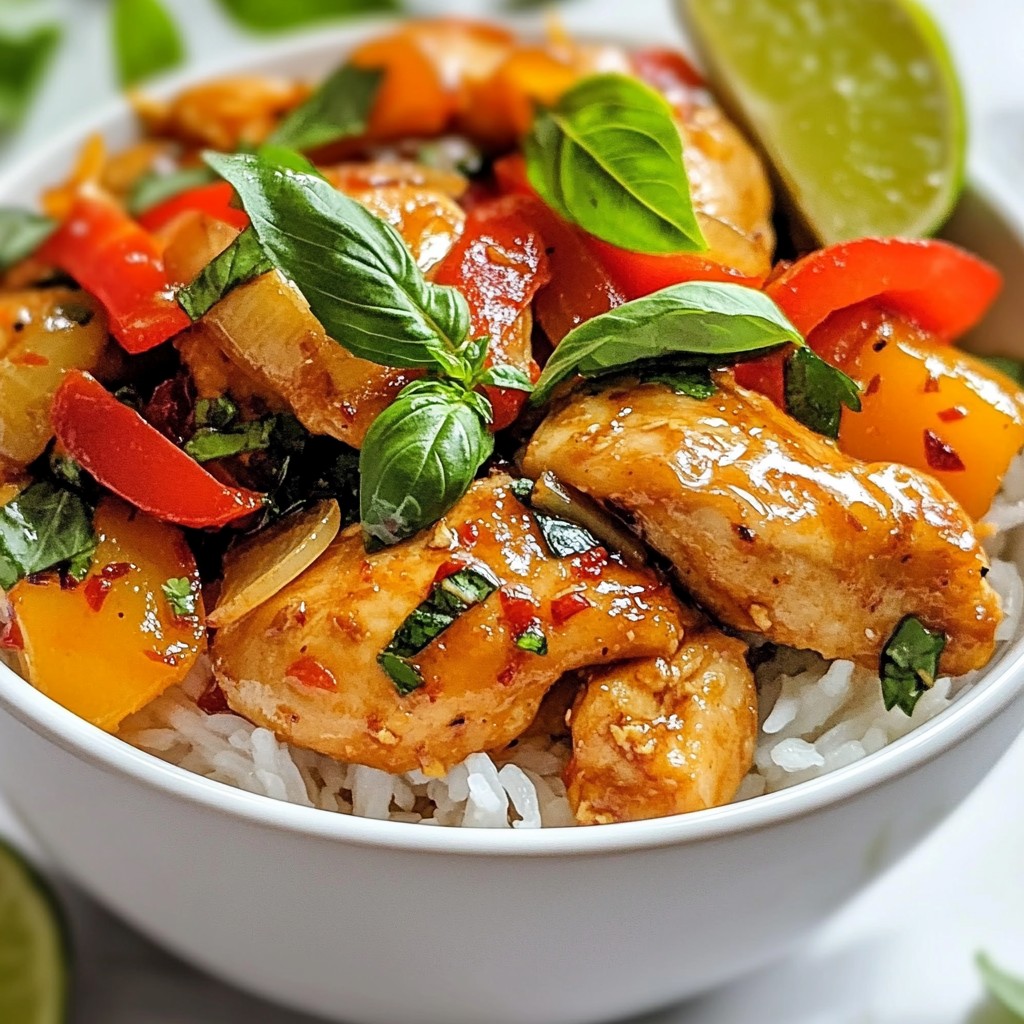
Are you craving a simple yet flavorful meal? Thai Basil Chicken Stir Fry is your answer! In this dish, tender chicken mingles with fresh veggies, creating a vibrant mix of tastes. You won’t need fancy skills or hard-to-find ingredients to whip this up. Follow my easy step-by-step guide and enjoy a delicious dinner that impresses. Let’s dive into the fresh flavors and quick prep of this classic Thai dish!
Why I Love This Recipe
- Quick and Easy: This recipe comes together in just 20 minutes, making it perfect for busy weeknights.
- Flavorful and Fresh: The combination of Thai basil and fresh vegetables adds vibrant flavors and colors to the dish.
- Customizable: You can easily adjust the level of spice by modifying the amount of chili paste to suit your taste.
- Healthy and Satisfying: Packed with protein and vegetables, this stir fry is a nutritious meal option that satisfies hunger.
Ingredients
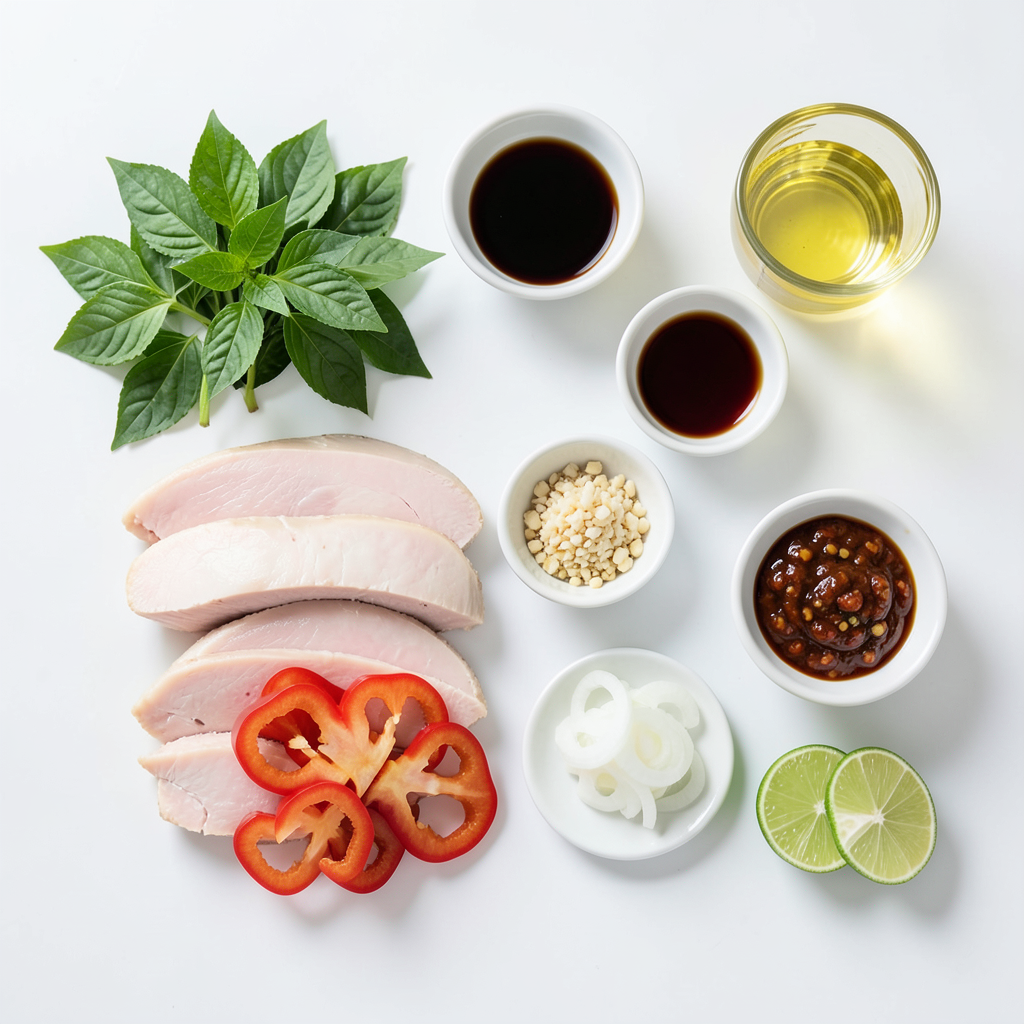
List of Ingredients
- Chicken and Vegetables
- 1 lb boneless chicken thighs, thinly sliced
- 1 cup fresh Thai basil leaves
- 1 red bell pepper, sliced
- 1 medium onion, sliced
- 3 cloves garlic, minced
- Sauces and Seasonings
- 2 tablespoons soy sauce
- 1 tablespoon oyster sauce
- 1 tablespoon fish sauce
- 1 tablespoon sugar
- 1 teaspoon chili paste (adjust to taste)
- 1 tablespoon vegetable oil
- Garnishes
- Fresh lime wedges, for garnish
When you gather these ingredients, you set the stage for a tasty meal. The chicken thighs provide rich flavor, while the Thai basil brings a unique zest. The colorful bell pepper and onion add crunch and sweetness. Garlic infuses the dish with warmth, tying everything together.
For the sauces, soy sauce gives a savory base. Oyster sauce adds depth, and fish sauce brings umami. The sugar balances the salty notes while chili paste adds kick, customizable to your taste.
Finally, fresh lime wedges brighten the dish, enhancing the overall flavor. With these ingredients, you’re ready to create a delightful Thai basil chicken stir fry that is both simple and satisfying.
Step-by-Step Instructions
Preparation Steps
Preparing Chicken and Vegetables First, slice the chicken thighs into thin strips. You want them to cook quickly and evenly. Next, slice the red bell pepper and onion. Then, mince the garlic. Make sure the Thai basil leaves are fresh and vibrant when you set them aside.
Making the Sauce In a small bowl, combine the soy sauce, oyster sauce, fish sauce, sugar, and chili paste. Mix well until the sugar dissolves. This sauce will tie all the flavors together. Set this mixture aside for later.
Cooking Process
Heating the Oil In a large skillet or wok, heat the vegetable oil over medium-high heat. Wait until the oil shimmers. This ensures that your chicken gets a nice sear.
Cooking Chicken and Aromatics Add the sliced chicken to the hot skillet in a single layer. Let it sear for about 2-3 minutes. Stir occasionally to cook evenly. When the chicken is nearly cooked, add the minced garlic and sliced onion. Stir-fry for about 2 minutes. The onion should turn translucent and fragrant.
Adding Vegetables and Sauce Now, toss in the sliced bell pepper and pour in the prepared sauce. Stir everything together. Cook for 2-3 more minutes. This will coat the chicken and vegetables in the sauce while keeping the bell pepper slightly crisp.
Finishing with Basil Remove the skillet from the heat. Add the fresh Thai basil leaves. Gently stir until the basil wilts from the heat. The aroma will be amazing.
Serving Suggestions
Serving Temperature Serve the Thai Basil Chicken Stir Fry hot. This dish is best enjoyed right after cooking.
Accompanying Sides Pair it with steamed rice or noodles. These sides soak up the delicious sauce. Enjoy your meal!
Tips & Tricks
Cooking Tips
Ensuring Perfectly Cooked Chicken To cook chicken well, slice it thinly. Thin strips cook faster and stay juicy. Heat your skillet until hot before adding chicken. This quick sear locks in flavor. Cook for about 2-3 minutes on each side. Stir often for even cooking. Always check that chicken reaches 165°F (75°C) for safety.
Achieving the Right Flavor Balance Flavor is key in this dish. Use fresh ingredients for the best taste. Thai basil adds a unique aroma. Adjust the chili paste for your spice level. If you like it sweet, add more sugar. Mix sauces well to ensure even flavor. Taste your dish before serving to make adjustments.
Storage Tips
Storing Leftovers Store leftovers in an airtight container. Keep in the fridge for up to three days. If you want to keep it longer, freeze it. Use a freezer-safe container and enjoy it within a month.
Reheating Instructions To reheat, use a skillet over medium heat. Add a splash of water to keep it moist. Stir often until heated through. You can also microwave for quick reheating. Just cover it to keep moisture in. Enjoy your meal again with just a bit of care!
Pro Tips
- Use Fresh Basil: Always use fresh Thai basil leaves for the best flavor. Dried basil won't provide the same aromatic quality.
- Adjust Spice Level: Customize the heat by adjusting the amount of chili paste used. Start with a small amount and add more if desired.
- High Heat Cooking: Ensure your skillet or wok is hot enough before adding the chicken. This helps achieve a nice sear and keeps the chicken juicy.
- Quick Cooking: Stir-fry quickly to keep the vegetables crisp. The cooking time should be minimal to maintain their vibrant color and texture.
Variations
Ingredient Swaps
Using Different Proteins You can change the protein in this dish easily. Try using shrimp, beef, or tofu. Each option gives a new taste. Shrimp cooks fast and adds a fresh flavor. Beef gives a rich taste, while tofu absorbs the sauce well.
Vegetarian or Vegan Alternatives For a vegetarian or vegan twist, use tofu or tempeh. They work well with the sauces. You can also add chickpeas for protein. This keeps the meal filling and tasty.
Flavor Enhancements
Adding Spices and Heat If you like heat, add more chili paste or fresh chilies. You can also use crushed red pepper. This will spice things up and make your dish exciting. Experiment with ginger for a warm, zesty flavor.
Incorporating Other Vegetables Feel free to add other veggies. Broccoli, snap peas, or carrots can add color and crunch. They also bring extra nutrients. Mixing in these vegetables keeps the dish lively and fun.
Cultural Significance
Origins of Thai Basil Chicken
Thai basil chicken, known as "Pad Krapow Gai," comes from Thailand. It is a street food favorite. This dish is simple yet packed with flavor. You can find it in many Thai restaurants. Each region has its own twist on this meal. In Bangkok, you may see more chili, while in the north, it may be milder. The dish uses fresh Thai basil, which has a unique taste. This herb is key to making it special.
Thai basil chicken shows how important fresh herbs are in Thai cooking. Thai cuisine values balance. You taste sweet, salty, spicy, and sour in one bite. This dish reflects that balance. It also highlights the use of fresh ingredients. Chefs aim for high-quality, fresh produce.
Meal Pairing Suggestions
Pairing is important to enhance your meal. For side dishes, try jasmine rice or stir-fried vegetables. Jasmine rice absorbs the sauce well and adds a nice touch. Stir-fried veggies, like broccoli or snap peas, add color and crunch.
When it comes to drinks, iced Thai tea is a great choice. Its creamy sweetness balances the dish's heat. You can also enjoy a light beer for a refreshing option. The right pairings make your meal even better.
FAQs
Can I use dried basil instead of fresh?
Yes, you can use dried basil. However, fresh basil gives better flavor. If you use dried, add less. Start with one teaspoon, and taste it.
How can I make this dish spicier?
To spice it up, add more chili paste. You can also add fresh chopped chilies. Adjust the heat based on your taste.
What is the best way to store leftovers?
Store leftovers in an airtight container. Let the dish cool first. Keep it in the fridge for up to three days.
Is it possible to make this dish gluten-free?
Yes, you can make it gluten-free. Use gluten-free soy sauce instead of regular soy sauce. Check all labels to ensure they are gluten-free.
This blog post covered how to make Thai Basil Chicken step by step. We explored the key ingredients, cooking tips, and cultural significance. I shared helpful variations for taste and dietary needs. Cooking this dish can be simple and fun. Enjoy learning and experimenting with flavors. You can create a great meal with fresh ingredients and your unique touch. Dive into cooking and have fun with Thai cuisine!